5 Oaxaca Craft Villages Near Monte Alban: Alebrijes, Black Clay and Weaving
The short answer
Five craft villages ride along on Monte Alban day trips. San Bartolo Coyotepec makes black clay, San Antonio Arrazola and San Martin Tilcajete carve alebrijes, Santo Tomas Jalieza weaves cotton on backstrap looms, and Teotitlan del Valle weaves wool rugs. The shared full days pair the ruins with two or three of the southern villages; Teotitlan comes only on the private days that also reach Hierve el Agua.
The five craft villages at a glance
A Monte Alban tour from Oaxaca that runs a full day is really a ruins-and-villages day, and the villages are not interchangeable.
| Village | Craft | What you watch | Where it is | Days that stop there |
|---|---|---|---|---|
| San Bartolo Coyotepec | Black clay | Burnishing and a smothered kiln | 25 to 30 minutes south | The shared full days, the private artisans day |
| San Antonio Arrazola | Alebrijes | Copal carving, fine painting | In the municipality the ruins stand in | The day trip with the entrance fee, the “clasico” day |
| San Martin Tilcajete | Alebrijes | Machete, knife, fine blade | 19 km south, 40 minutes | The lowest-priced full day, the private artisans day |
| Santo Tomas Jalieza | Cotton textiles | The backstrap loom | Beside Tilcajete | The same pair |
| Teotitlan del Valle | Wool rugs | Natural dyes, the pedal loom | East of the city | The private days with Hierve el Agua |
The half days stop at none of them.
What each village makes, and what you watch being made
1. San Bartolo Coyotepec: black clay
The clay is grey when it comes out of the ground here. You watch it modelled by hand in parts, dried in the sun, then rubbed with a stone until it shines. Some pieces are pierced, which the potters call calado. The black comes last: the kiln is brick and wood-fired, and starving the fire of oxygen turns the pots dark.
Look for the state folk-art museum, and for the black-clay market that opened in November 2022 with 66 craft stalls. Every shared full day stops here, and the small-group day with admissions pairs it with an hour among alebrije carvers.
2. San Antonio Arrazola: where the alebrije carving began
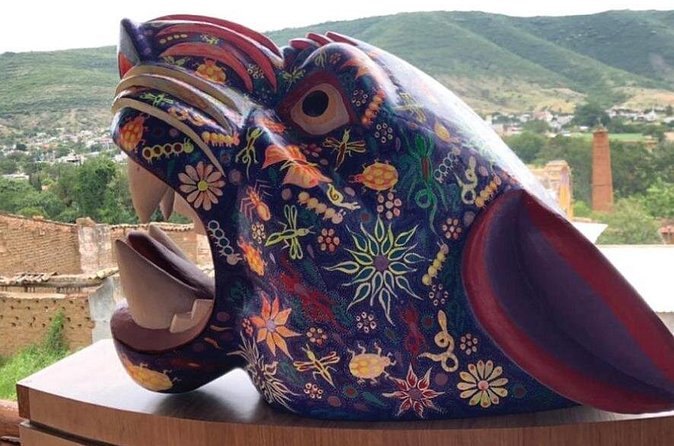
Manuel Jimenez (1919–2005) was born in Arrazola and pioneered the carving. From the 1950s his figures drew folk-art collectors, and his family workshop still runs a small museum in the village. You are shown both halves of the craft: the knife work on copal wood, then the fine painting, the more specialised of the two.
Arrazola belongs to Santa Cruz Xoxocotlan, a municipality that also holds part of the protected zone around the ruins, so it pairs easily with your morning on the ridge. The day trip to Arrazola and the black clay town stops here, and so does the “clasico” day. Both crafts are photographed in the gallery.
3. San Martin Tilcajete: alebrijes, south of the city
The carving took root in Tilcajete after Arrazola, and the village is home to the Jacobo y Maria workshop, 19 km and 40 minutes from Oaxaca. Here you watch copal take shape under three tools: a machete for the outline, a knife for the carving and a fine blade to finish.
The lowest-priced full day comes here, and so does the private artisans day, which is quoted for your group and not per seat.
4. Santo Tomas Jalieza: backstrap weaving
Jalieza is next door to Tilcajete, so the two come as a pair. The craft changes completely: cotton woven on the backstrap loom, the telar de cintura. If weaving is what you want, check that Jalieza is named on your day before you pay, because the days that go to Arrazola leave it out.
5. Teotitlan del Valle: wool rugs and natural dyes
Teotitlan lies east of the city, away from the other four. The rugs are woven on pedal looms from criollo sheep's wool, and you are shown the dyes. The wool is washed with crushed amole root, cochineal gives the reds, and the blue is dyed in cold water. Pomegranate, walnut husks and pericon supply other colours. Look for the Zapotec designs: grecas, crosses and diamonds.
The village comes only on the private days that also reach the falls. The private day that covers both entrance fees gives the weavers a stop of their own. The driving is set out in how the combined days with the falls run.
Arrazola or San Martin Tilcajete: which alebrije village?
Neither is the real one. Both sit inside the same protected geographical indication, declared in 2022. So pick by what else you want from your day.
- Arrazola is the origin, and the natural partner for the ruins. Choose it for the Jimenez family museum.
- Tilcajete comes with Jalieza and the black clay town on the southern loop. Choose it for the best-known workshop and the weaving.
A figure takes from a few hours up to a year to carve. It then dries in the sun for five days to a month or more before it is sanded and painted.
Which Monte Alban day stops at which village
Match the village to the day before you book. The same choice settles whether you pay at the gate.
- Arrazola and Coyotepec. The day trip runs 7 hours with the entry ticket inside the fare. From $53 per person. The “clasico” day runs 9 hours and adds a chocolate mill. From $42 per person.
- Coyotepec and an alebrije workshop. The small-group day with admissions caps the group at 15 and puts the ticket, a bilingual guide, water and snacks inside one fare. From $50 per person.
- Tilcajete, Jalieza and Coyotepec. The lowest-priced full day sells the ticket as a booking option. From $28 per person. The private artisans day gives the ruins one hour. From $227 for a group of up to 4.
- Teotitlan. The private day with both entrance fees inside the fare. From $311 for a group of 2.
Know which village you want?
Set the full days side by side, with what each fare covers at the gate.
What do the villages cost you at the ruins?
Time, mostly. The half days give you up to three hours on the plaza and no village at all. The full days give you one to two and a half hours at the ruins and spend the afternoon in the valley.
If the ruins are the reason you came, take a half day at the ruins and see the villages another day. On a full day, read what to see at Monte Alban first.
Then the money. Only some of these fares include the MX$210 entrance fee a foreign visitor pays in 2026, so check which fares include the Monte Alban ticket before you pay. Lunch is extra on all of them, and the full sum is in what a Monte Alban tour costs.
Can you visit the craft villages without a tour?
Yes, and the black clay town is the easy one. The folk-art museum and the black-clay market are public places, and the state tourism office says you can visit the workshops in artisans' homes.
The harder part is linking villages. They are spread south and east of the city, so a day with a driver joins three of them and public transport does not. On private tours you name the villages. For the ruins half of your day, check hours and entry rules: last entry is 16:00.
Questions travellers ask about the craft villages
Which is better for alebrijes, Arrazola or San Martin Tilcajete?
Where is black clay pottery made near Oaxaca?
Is the Monte Alban entrance fee included on the craft village tours?
Can you see Monte Alban and the craft villages in half a day?
Next step: pick your day by the village it stops at, on Monte Alban Tours.
Full days that add the villages to the ruins

From Oaxaca: Monte Alban, Alebrijes & Black Clay Day Trip
Entry ticket included, two guided hours, then the alebrije and black clay villages.
From $53 per person
Check Availability
Monte Alban - Full Day Guided Tour with or without Food - Oaxaca
The cheapest fare of the thirteen, with a 7:30 pickup and entry sold as an upgrade.
From $28 per person
Check Availability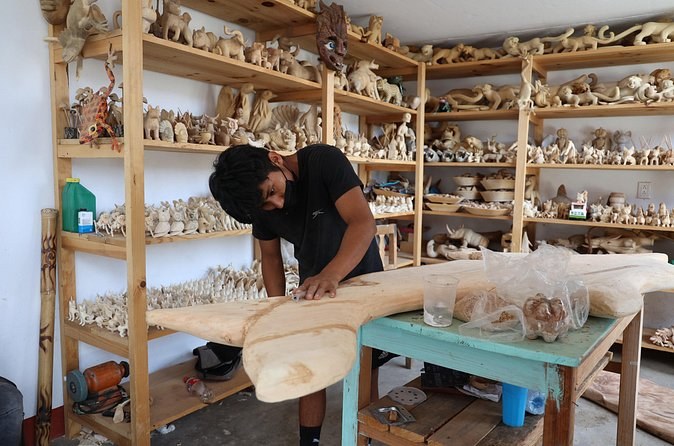
Tour Monte Alban "clasico"
Nine hours from beside the Zocalo, ending at a chocolate mill rather than a market.
From $42 per person
Check Availability
Oaxaca: Premium Sightseeing Tour of Monte Alban and Master Artisans
An hour at the ruins and three artisan villages, guided visits inside the fare.
From $227 per group, up to 4
Check Availability