Monte Alban for History Lovers: The Complete Cultural Guide
The short answer
Yes, and more than most Mexican sites — because the interest here is an argument rather than a view. Fifteen hundred years of occupation, a carved record that has been re-read twice, ninety years of excavation with named archaeologists, and a museum in the ticket. Give it three hours and take a guide.
Is it worth it for a history reader?
If you have read anything at all about Mesoamerica, this is a better morning than the photographs suggest. Chichen Itza and Teotihuacan give you scale. Monte Alban gives you evidence you can stand in front of and disagree with: a list of conquered places, a set of carvings whose meaning was overturned, and a capital that stopped functioning without anyone being able to say why.
What it does not give you is interpretation. Almost nothing is labelled, and what is sits in Spanish. That single fact is why the guided options here matter far more than they would at a site with good signage, and it is worth reading the structures before you go even if you take one.
The chronology, in one table
| Phase | Dates | What it left behind |
|---|---|---|
| Monte Alban I | c. 500–300 BC | Foundation; the Danzantes carvings |
| Monte Alban II | c. 100 BC–AD 200 | Building J and its conquest slabs |
| Monte Alban IIIA | c. AD 200–500 | Teotihuacan influence in architecture and ceramics |
| Monte Alban IIIB / IV | c. AD 500–1000 | The capital at full size, then its unwinding |
| Monte Alban V | Postclassic | Mixtec reuse, including the burial in Tomb 7 |
Those five phases are Alfonso Caso's, built on ceramics excavated from 1931 onward, and they have survived ninety years of subsequent work. The whole story is on history.
The three things worth the most of your time
- Building J. Forty-odd slabs, each a place-name over an inverted head, on a building set at an angle to everything else. Whether it is a record or a claim is the best open question on the hill.
- Los Danzantes. Three hundred carvings that were read as dancers for a century and are now read as captives. A rare chance to see an interpretation change in front of you.
- The terraces. Walk north past the plaza and look down. That is where the thirty-five thousand people were, and it is the part of the site that took longest to be understood.
The excavation history, which is half the interest
Monte Alban is unusually well documented as a dig. Caso opened the monumental core from 1931 with Ignacio Bernal and Jorge Acosta, and found Tomb 7 in 1932. From the late 1960s Kent Flannery and Joyce Marcus shifted the question from the monuments to the origins of the whole valley system. From the early 1970s Richard Blanton walked the terraces and established that this was a city.
That progression — monuments, then society, then settlement — is the history of twentieth-century Mesoamerican archaeology in one hill. It is also why an older guidebook and a newer one describe the place quite differently.
What the site museum is actually for
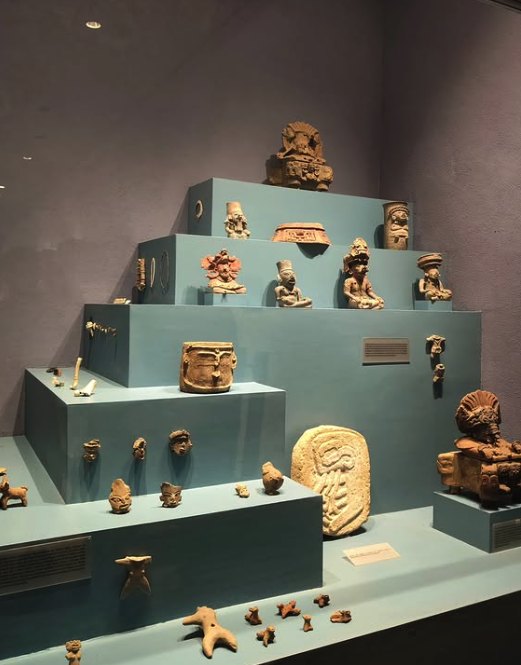
It is included in the ticket, it sits by the entrance, and most visitors walk past it. Over ninety years, carved stones have been brought in off the plaza to keep them out of the weather, so a proportion of what you came to look at is indoors.
Go in on the way out rather than the way in. Having the plaza already in your head makes the difference between a case of stones and a set of objects you can place. What else to prioritise is on what to see.
How much time this audience needs
Three hours, not two. The standard two-hour visit walks the plaza; three lets you climb both platforms, get out to the terraces and give the museum twenty minutes.
The half-day tours are the ones that give you that, because the ruins are all they do. A Monte Alban half day tour puts the entire booking on the ridge. The full-day trips spend the afternoon in the craft villages, which is a good day and a different one — the comparison is in how to get there and on the homepage table.
Reading before you go
Two things repay an hour beforehand. The first is the layout, because a plan in your head turns mounds into buildings: the site map has it with a walking order. The second is knowing which claims are settled and which are argued, so that you can tell when a guide is reporting and when they are filling a gap.
Then go at eight. The plaza is empty, the light rakes across the carvings rather than flattening them, and you will have finished before the coaches arrive. The seasonal detail is on weather and when to go.
What is still argued, and why that is the point
A handful of questions here are genuinely unsettled, and you will get better value out of the morning if you know which they are before a guide starts talking. Whether Building J's slabs record conquests or claim them. How far the Teotihuacan relationship ran in each direction. And why a functioning capital stopped functioning around AD 800.
None of those has a signboard answer, and the honest guides say so. If you have read older material you will also notice how much has moved: the Danzantes were dancers for a century, the site was a ceremonial centre until somebody counted the houses on the terraces, and both readings sat in print for decades.
Which guide, and what to ask
The reviews on the tours listed here are unusually consistent about one thing: travellers name their guide and describe being shown things they would have walked past. Almost nobody praises the view on its own. That is a strong signal about what is actually being sold, and you can read it yourself on reviews.
Worth asking on the plaza: what the evidence is for the Danzantes being captives, what else Building J might be recording, and why the capital stopped. A guide who distinguishes the established from the argued is the one you wanted, and you will know within ten minutes which sort you have. Hours, entry and the practical detail are on visitor information.
Next step: the half days put every booked hour on the ridge itself — compare them on Monte Alban Tours.
Tours built around the ruins rather than the villages
Monte Alban Guided Half Day Tour
Three guided hours on the plaza from an office by the Cathedral. Ticket paid at the gate.
From $32 per person
Check Availability
Oaxaca de Juarez: Monte Alban Half-Day Tour
Ninety guided minutes plus forty of your own, and a drop-off at your own door.
From $31 per person
Check Availability
Private Tour: Monte Alban, Hierve el Agua, Teotitlán and Mezcal
The only private day covering both the ruins and the Hierve el Agua entrance fee.
From $311 per group, up to 2
Check Availability