The Best Time to Visit Monte Alban: Season, Day and Hour
The short answer
Go in the morning, in any month. October and November are the best weeks of the year: the rain has stopped, the valley is still green and the dawns are cold. Avoid the middle of the day from March to May, when the valley below averages above 33 °C and the plaza has no shade at all.
Why the hour matters more than the month
Start here, because it is the decision that changes the visit most. Monte Alban is a levelled ridge with nothing on it to shelter under, standing 400 metres above the valley floor. The sun reaches you from the moment it clears the eastern ridge.
Between eight and ten in the morning the plaza is cool, empty and lit from the side, which is the only light that makes the carvings read. By noon it is hot, crowded and flat. No month changes that pattern; it only changes how severe it is.
The two seasons, in one paragraph each
The dry season runs November to April. Almost nothing falls between November and February — those three months together average under 21mm. Skies are clear, dawns are cold and the valley browns off as the season goes on. March and April are dry and hot, and April is the hottest month of the year.
The wet season runs May to October. Rain is concentrated in the afternoon, which is why it matters far less than the totals suggest. June is the wettest month at 188mm and September the second at 164mm. The valley is green, the air is clear between showers, and a morning tour is barely affected.
Which month is actually best?
| Period | What you get | What you trade |
|---|---|---|
| November–December | Dry, clear, green, cold mornings | Busy over the holidays |
| January–February | The driest, clearest weeks | The valley has gone brown |
| March–April | Reliable weather all day | Real heat — April is the hottest month |
| May–June | Green returns, fewer visitors | Afternoon storms, June the wettest month |
| July–August | Green valley, clear between showers | The Guelaguetza fills the city in July |
| September–October | October is the best trade of the year | September storms arrive early in the day |
If you can pick freely, take the second half of October. Full monthly figures are on weather and when to go.
Does the day of the week change anything?
Yes, in two ways. The site opens every day including Mondays, which is unusual in Mexico and makes a Monday a genuinely good choice — the museums in the city are shut and the ruins are not.
Sundays are the busiest. Free entry for Mexican nationals and foreign residents falls on Sundays, so the site fills with domestic visitors, and a visiting tourist pays full price into a crowd. If your week is flexible, use a weekday.
What time should you actually arrive?
Eight o'clock, when the gate opens. You get an hour or more before the first coaches, the temperature is at its lowest of the day and the light rakes across the stone. Every guided half day here is built around exactly that, and the cheapest full day collects you from your accommodation between 7:30 and 7:50 for the same reason.
The worst window is noon to three. Last admission is 16:00, so a late afternoon is not an alternative — if the morning is impossible, take a half day on a different day rather than a hot afternoon on this one.
The two weeks that fill Oaxaca
Two festivals dominate the calendar and both are worth planning around, in either direction.
The Guelaguetza takes over the city for the second half of July. It is one of the great festivals of Mexico and a superb reason to be in Oaxaca — and it fills every hotel, every restaurant and the ruins with it. The Day of the Dead at the start of November does the same at a smaller scale and with a completely different atmosphere.
If you are here for either, book your tour earlier than you otherwise would and take the earliest departure you can. If you are not, the weeks either side are quieter than the annual average.
Does rain ever stop the visit?
The zone does not close for weather, and in the wet season the rain generally arrives after lunch, by which time a morning visit is over. What rain does affect is the road up, which slows in a downpour, and the stone, which is slippery underfoot on the stairways.
Several operators can cancel a departure from their side for bad weather or too few bookings and refund the fare when they do. Every tour listed here refunds in full up to 24 hours ahead in any case, so a poor forecast costs you nothing to wait out.
What about the light, if you are photographing it?
Early, and from the south. The whole-plaza frame is taken from the top of the South Platform with the sun behind you, which means the first two hours after opening. The carved slabs on Building J and the Danzantes stones need raking light rather than overhead sun, so they want the same window.
The frame almost nobody takes is from beyond the North Platform, looking back down the length of the plaza with the valley falling away on both sides. That one explains the site better than any other, and it costs ten minutes of walking. More on what to prioritise is on what to see.
Altitude, wind and the thing a temperature table cannot show
The published figures for this valley are measured in the city, 385 metres below the ruins. Up on the ridge three things differ, and none of them appears in a monthly average.
It is a little cooler, which helps. It is noticeably windier, which helps more than you expect in April and matters against you on a cold January morning. And the sun is stronger, because there is nothing between you and it — no trees, no walls above head height, and no shelter anywhere on 300 metres of open plaza.
The practical translation is simple. Whatever the forecast says for Oaxaca, dress for a degree or two cooler and considerably brighter, and carry a layer you can take off by ten. The monthly figures themselves are on weather and when to go.
What changes on the ground between seasons
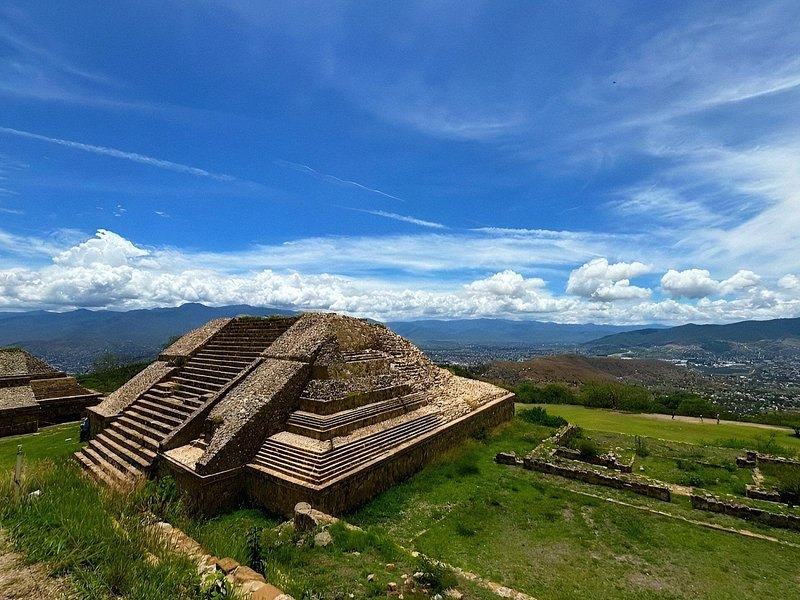
The stone does not change; the setting does, and it changes what your photographs look like. The same is true across the valley, at Hierve el Agua and in the villages. Through the wet season and into November the whole ridge and the valley below are green, and the platforms stand out of grass. By January the grass has gone gold, and by March and April the valley is dry brown with the mountains hazier behind it.
Neither is better and both are worth knowing before you set expectations from somebody else's photographs. The green pictures were taken between June and November; the ones with sharp blue skies and pale ground were taken between December and April.
What the seasons do not change is the layout, the climb or the hours. Those are the same all year, and they are on visitor information.
Is any month a bad month?
No, and that is worth saying because seasonal advice tends to imply otherwise. This is a dry-climate valley at altitude with a mild year: the coldest month still reaches 28.9 °C by day and the wettest still has dry mornings.
What varies is comfort and colour, not access. Pick the month your trip gives you, then pick the hour carefully — that is where the whole difference is.
Putting it together
- Best overall: the second half of October, arriving at eight.
- Best for clear skies: January and February, with a layer for the dawn.
- Best for a green valley: September and October.
- Hardest going: April at midday.
- Book earlier than usual: the second half of July, and the first week of November.
The full monthly table is on weather and when to go, the practical detail on visitor information, and the early departures are compared on Monte Alban Tours.
Frequently asked questions
What is the best month to visit Monte Alban?
What is the best time of day?
Should I avoid the rainy season?
Is it open on Mondays?
How busy is it on a Sunday?
Does the Guelaguetza affect a visit?
The earliest departures on the site

Monte Alban - Full Day Guided Tour with or without Food - Oaxaca
The cheapest fare of the thirteen, with a 7:30 pickup and entry sold as an upgrade.
From $28 per person
Check Availability
Tour de medio día a monte alban
Collected from your hotel at 8:30, back by lunch, with a bilingual guide throughout.
From $32 per person
Check Availability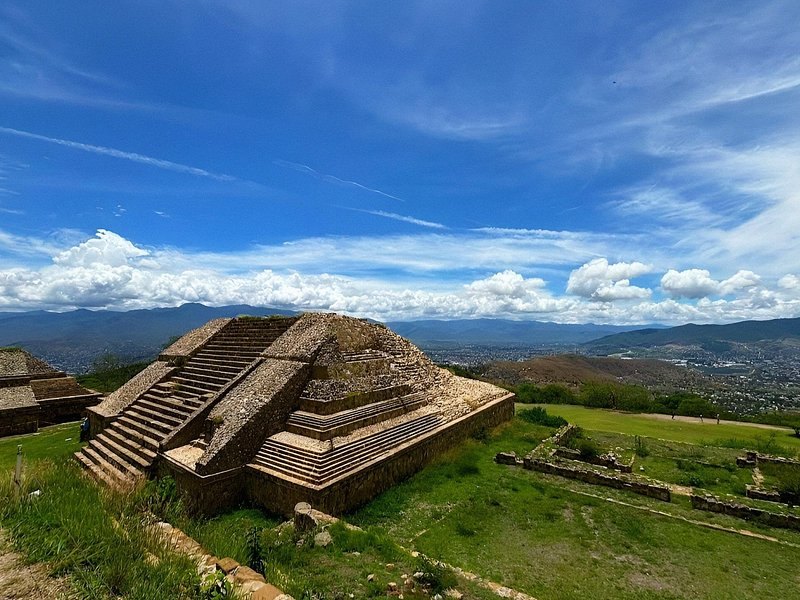
Monte Alban Guided Half Day Tour
Three guided hours on the plaza from an office by the Cathedral. Ticket paid at the gate.
From $32 per person
Check Availability